
Laundry Rooms Next to the Attic: Why South OC Dryers Overheat
Your Dryer Lives in the Hottest Room in the House
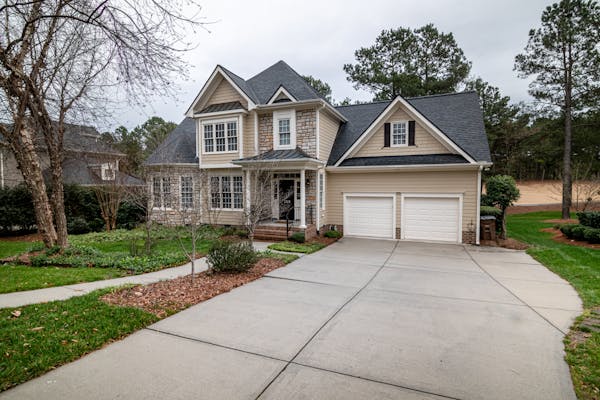
Walk through the two-story homes off Olympiad or up in Pacific Hills and Painted Trails, and you’ll find the laundry room in one of two places: upstairs next to the bedrooms, tucked under the attic, or wedged into a garage corner with the water heater. Builders loved both layouts. The upstairs laundry sold houses — nobody wants to haul baskets down a staircase.
Here’s what the floor plan doesn’t tell you. That upstairs laundry room shares a ceiling with an attic that hits 130–150°F on a July afternoon in South Orange County. I’ve put a thermometer in attics off Alicia Parkway in August and watched it read 147°F at 3 p.m. The laundry room below might be 85–90°F even with the AC running, because it’s a small closed room with a machine inside that’s actively producing heat.
Your dryer was engineered assuming it lives in a 70°F room. It is not living in a 70°F room.
What Heat Soak Actually Does Inside the Machine
A dryer manages heat with a handful of small parts, and every one of them suffers when the ambient temperature climbs:
The thermal fuse. This is a one-shot safety device — on most Whirlpool, Maytag, and Kenmore dryers it’s a little white plastic part on the blower housing that permanently blows if exhaust air passes roughly 196°F. It’s the part I replace most in this city. When the room is already 90°F and the vent run is half-clogged, exhaust temps flirt with that limit on every load. Fuse blows, dryer spins with no heat, or won’t start at all.
The thermistor and cycling thermostat. These regulate normal operation, and they drift when they spend every summer heat-soaked. A drifted thermistor means the dryer thinks clothes are done when they’re damp, or runs the heater longer than it should. Customers describe it as “the dryer got stupid.” That’s a $30 sensor, not senility.
The control board. Electronics hate heat, full stop. Capacitors on dryer main boards are rated for a temperature range that a garage-corner install under a low attic exceeds regularly. I see board failures on 8-year-old dryers in upstairs laundries that I’d expect on 15-year-old dryers anywhere else.
The Two-Story Vent Problem Nobody Mentions at Closing
Heat soak is half the story. The other half is the vent run, and on a two-story house it’s usually terrible.
A downstairs laundry on an exterior wall might have a 4-foot vent. Straight out, done. An upstairs laundry vents through the roof, or snakes horizontally through the attic to a wall cap — 20, sometimes 30 feet of duct with two or three elbows. Every 90-degree elbow costs you the equivalent of about 5 feet of straight run in airflow. So that “25-foot” roof vent behaves like 40 feet.
Long runs move air slower. Slow air drops its lint instead of carrying it out. Lint packs the elbows first, then the roof cap — and roof caps are the worst offenders, because half of them have a little screen or damper that mats over with lint and nobody ever climbs up to look. I’ve pulled bird nests out of two roof caps this year. One in Canyon Crest, one in Aliso Viejo.
Restricted airflow means hot air stays in the drum longer. Exhaust temps climb. And we’re right back at that 196°F thermal fuse.
The Thermal-Fuse Repeat-Failure Loop
This is the pattern that generates my angriest phone calls, and it’s almost never the previous repair guy’s parts that were bad. It goes like this:
Dryer stops heating. Someone replaces the thermal fuse — fifteen-dollar part, dryer works again. Six weeks later, no heat. New fuse. Works. Blows again before Labor Day.
The fuse isn’t failing. The fuse is doing its job. It’s a smoke detector, and replacing it without fixing the airflow is pulling the battery out of a smoke detector because the beeping annoys you. If a thermal fuse blows twice, the vent run is restricted, the blower wheel is packed with lint, or the felt drum seals are leaking air — something is making that machine run hot, and until it’s found, you’ll keep buying fuses. Or worse. Restricted dryer vents are a genuine fire hazard, not a hypothetical one.
When I replace a thermal fuse, I check the vent’s back-pressure and the blower housing before I leave. Anything else is a repeat appointment with extra steps.
Booster Fans: Sometimes the Answer, Often a Band-Aid
For genuinely long runs — over about 25 equivalent feet, which describes plenty of upstairs laundries in this housing stock — an inline booster fan is a legitimate fix. It mounts in the duct in the attic, kicks on with a pressure switch when the dryer runs, and keeps air velocity high enough to carry lint all the way out. Installed, you’re looking at $400–$600, and on the right house it ends the problem for good.
But I’ve also been called to houses where a booster was installed on top of a crushed foil transition hose behind the dryer, or a roof cap that hadn’t been cleaned since escrow closed. The booster was blowing hard against a wall of lint. Boosters don’t fix restrictions; they fix distance. Clean and correct the run first. If airflow is still weak because the run is just plain long, then add the fan. And know that the booster itself collects lint and needs cleaning too — it’s one more thing in the attic to forget about.
A Cleaning Cadence That Matches This Housing Stock
The generic advice says clean your dryer vent “every one to three years.” Too vague. Here’s what I actually recommend for South OC:
- Upstairs laundry, roof or long attic vent: every 12 months. No exceptions. Book it the same month you do smoke detector batteries.
- Garage laundry, short wall vent: every 2 years is fine — unless there’s a pet in the house or you’re washing for five people, then annually.
- Roof cap inspection: every cleaning, make sure whoever does it actually gets on the roof or runs the brush the full length. A “vent cleaning” that stops six feet in is theater.
- Every load: lint screen, obviously. And once a month, vacuum the slot the screen sits in — a shocking amount of lint bypasses the screen and lands right on the thermal fuse’s blower housing.
Professional vent cleaning around here runs $120–$200 depending on run length and roof access. Compare that to the repair menu: thermal fuse replacement $150–$250, thermistor or thermostat $180–$280, a cooked control board $300–$450. The cleaning is the cheapest line on the page, and it prevents all the others.
If Your Dryer Keeps Quitting Every Summer
That’s not coincidence, and it’s not a lemon. It’s physics — a hot room, a long vent, and a safety fuse doing exactly what it was designed to do. Call me at (949) 954-5358 and I’ll find the restriction instead of selling you your fourth fuse. The diagnostic is $89 and waived if you go ahead with the repair.
Learn more about our dryer-repair services in Mission Viejo.